
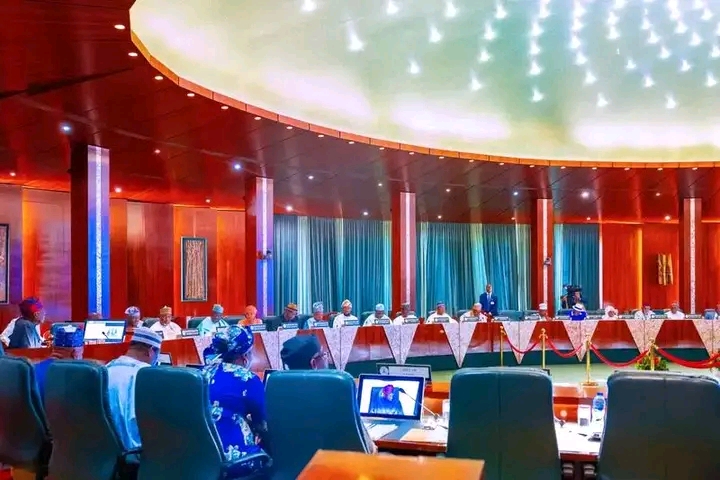
The Federal Government has approved the National Industrial Relations Policy (NIRP) 2025 to regulate trade union activities and reduce frequent industrial actions in Nigeria. The announcement was made on Thursday following the Federal Executive Council (FEC) meeting, presided over by President Bola Tinubu, as part of efforts to foster harmonious workplace relations.
Briefing State House correspondents, Minister of Information and National Orientation, Mohammed Idris, explained that the NIRP addresses the absence of a comprehensive policy, which has fueled recurrent strikes. “This policy is essential for regulating the conduct of trade unions and promoting social dialogue and tripartite cooperation among government, employers, and workers,” Idris said. He noted that the policy aligns Nigeria with International Labour Organisation (ILO) standards and aims to prioritize industrial harmony as a national imperative.
The government also withdrew a controversial circular from the National Salaries, Income and Wages Commission, which had triggered a recent strike by health workers. Coordinating Minister of Health and Social Welfare, Prof. Alli Pate, confirmed ongoing negotiations with health unions, including the Nigerian Medical Association (NMA) and the National Association of Nigerian Nurses and Midwives – Federal Health Institutions Sector (NANNM-FHI), to revise allowances transparently. “Not all issues are financial; we are resolving establishment matters like centralized nurse postings,” Pate said, adding that further talks with striking nurses are scheduled for Friday.
As the NANNM-FHI’s nationwide warning strike entered its third day, the union reiterated its demand for the government to address key issues, including welfare packages, before suspending the action. Nurses and medical doctors embarked on the strike to protest poor working conditions and inadequate remuneration.
Meanwhile, Organised Labour, comprising the Nigeria Labour Congress (NLC) and the Trade Union Congress (TUC), vowed to resist government attempts to sow disunity between the two bodies. TUC President Festus Osifo, represented by Secretary-General Dr. Nuhu Toro, assured solidarity during a meeting with the Radio, Television, and Arts Workers Union (RATTAWU) leadership. “We are aware of divide-and-rule tactics, but together, we can surmount these challenges,” Osifo said.
At NLC headquarters, President Joe Ajaero condemned government and security agency interference in union affairs, describing it as “unheard of” globally. Referencing recent meddling in RATTAWU’s internal disputes and mismanagement of workers’ funds under the Nigeria Social Insurance Trust Fund (NSITF) and National Pension Commission (PenCom), Ajaero warned that the ILO is monitoring Nigeria’s actions. He also criticized unionists who invite security agencies to disrupt proceedings for personal gain, stressing that trade unions operate independently under ILO principles.
Social media platforms like X reflect heated discussions, with some users supporting the NIRP as a step toward industrial peace, while others expressed skepticism about its enforcement. As negotiations with health workers continue, the government’s commitment to dialogue and the new policy will be closely watched to determine their impact on Nigeria’s labor landscape.