
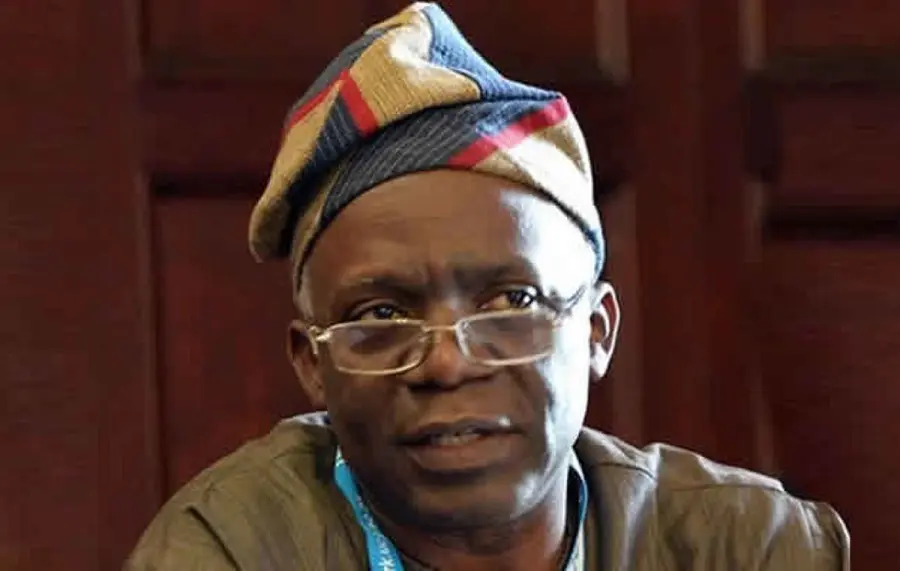
Human rights lawyer and Senior Advocate of Nigeria (SAN), Femi Falana, has issued a grave warning to Nigerian courts, urging them to urgently address serious constitutional violations, especially relating to the imposition of emergency rule, to prevent a looming democratic crisis.
In an interview on Wednesday, Falana sharply criticized the judiciary for its failure to promptly rule on constitutional infractions. He described Nigeria’s political climate as one rife with “grand impunity,” where governments frequently disregard the rule of law.
Falana focused his critique on the constitutional legitimacy of the emergency rule imposed in Rivers State, asserting that the Nigerian Constitution does not grant the president authority to suspend elected officials during such states of emergency.
“Nobody, no lawyer, including those supporting emergency rule, has identified any constitutional section allowing the president to remove or suspend elected officials during a state of emergency,” Falana said.
He clarified that Section 305 of the Constitution permits the president to impose emergency measures solely to restore law and order, but it does not authorize the suspension of governors, “even for one day.”
The senior advocate condemned the judiciary for prolonged delays that render constitutional cases moot by the time they are resolved. He explained that courts tend to wait until governors are reinstated before ruling, often dismissing cases as “academic” once normalcy returns.
“This pattern has established a dangerous precedent,” Falana noted, citing previous emergency rule cases in Plateau State (2002, 2004, and 2006) where courts failed to deliver timely judgments on constitutional limits.
Drawing a comparison with the United States, Falana emphasized the importance of swift judicial intervention in safeguarding democracy.
“In the US, courts prevented President Donald Trump from undermining democratic institutions, ensuring the country did not slip into chaos,” he explained. Unlike Nigeria, such cases there are resolved within weeks, not months.
Falana’s warning was stark: Nigeria’s courts must decisively uphold the constitution or risk plunging the nation into a democratic crisis.
“This is not about any particular president or governor. We must understand where we stand. A democracy cannot function if courts fail to address blatant constitutional breaches,” he stressed.
He further criticized the country’s governance, likening it to a military dictatorship in many respects and called for urgent judicial action to restore constitutional order.