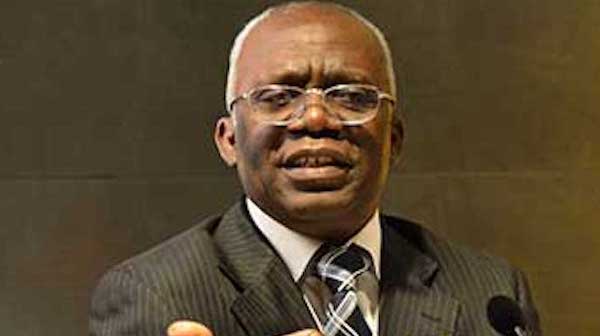
Human rights lawyer Femi Falana has condemned recent sanctions imposed on Cuba by U.S. President Donald Trump, describing them as illegal and unconstitutional.
In a statement, Falana argued that the executive order targeting Cuba’s energy supply chain violates both U.S. constitutional principles and international law. The policy, signed on January 29, 2026, imposes tariffs on countries supplying oil to Cuba, effectively restricting the island’s access to fuel.
Falana cited a recent ruling by the Supreme Court of the United States in Learning Resources Inc. v. Trump, which held that the president lacks the authority to impose tariffs without congressional approval.
According to him, the judgment makes clear that taxation powers, including tariffs, are reserved exclusively for Congress.
He maintained that the Trump administration’s reliance on the International Emergency Economic Powers Act and the National Emergencies Act does not justify sweeping trade restrictions.
– Trump
“It is therefore submitted that the imposition of tariffs on countries that supply oil to Cuba is illegal and unconstitutional,” Falana said, insisting that the court ruling invalidates the legal basis of the sanctions.
He also criticised Trump’s reaction to the judgment, accusing the president of attacking the justices despite the binding nature of their decision under the rule of law.
Falana further linked the sanctions to worsening humanitarian conditions in Cuba, noting that restrictions on oil imports have strained the country’s economy and contributed to a nationwide power outage following the collapse of its electricity grid.
Although electricity has since been restored after emergency interventions, he warned that the crisis highlights the broader consequences of U.S. policy.
Falana described the sanctions as a form of economic strangulation and cautioned against reported threats of military action, saying any such move without congressional approval would also be unconstitutional.
He urged U.S. institutions to uphold legal checks on executive power and ensure compliance with both domestic and international law.