

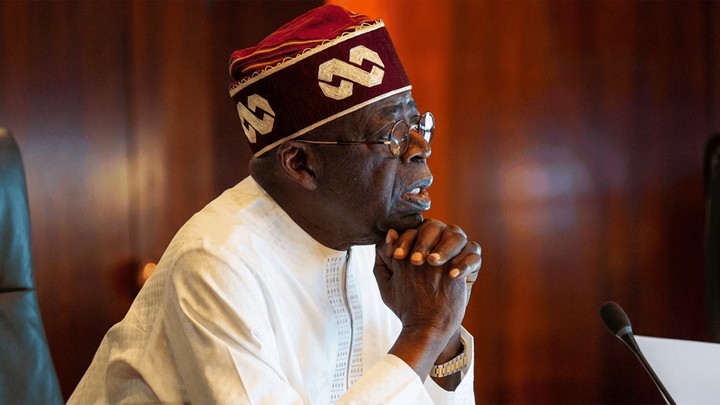
The Managing Director of the Federal Housing Authority (FHA), Hon. Oyetunde Ojo, has said the discovery of unauthorised government agencies should be seen as evidence of President Bola Ahmed Tinubu’s determination to expose wrongdoing rather than conceal corruption within the system. TrackingExecutive Branch Policy Changes
Ojo said some of the irregularities uncovered by the government predated the Tinubu administration, arguing that the critical issue was the President’s response once they were brought to his attention.
Speaking during a live television interview in Abuja on Monday, the FHA boss said no President could personally detect every infraction occurring across the federal bureaucracy, but stressed that Tinubu had demonstrated a willingness to allow relevant institutions to investigate and act against wrongdoing.
“One good thing we should thank Mr President for is dealing with issues. He is not sweeping anything under the carpet”, Ojo said.
He was responding to questions over recent discoveries of unauthorised agencies and concerns about how such bodies could operate within government despite the administration’s anti-corruption stance.
Ojo maintained that the existence of the irregular agencies was not peculiar to the present administration, saying investigations had shown that some of them had existed before Tinubu assumed office.
According to him, what distinguished the current administration was the decision to confront the problem once it surfaced rather than suppress the discoveries.
He said the President had promptly involved the appropriate anti-corruption agencies when the first case came to his attention, resulting in the closure of the purported agency and investigation of those connected with it.
Ojo declined to comment on the substance of cases already before the courts, saying it would be inappropriate to pronounce on matters undergoing judicial proceedings.
He said the subsequent discovery of other unauthorised agencies further demonstrated the depth of irregularities that had accumulated within the bureaucracy and the need for sustained scrutiny.
The FHA managing director also linked the discoveries to reforms being undertaken in the federal civil service, arguing that stronger institutional processes were increasingly exposing practices that might previously have gone undetected.
“So this thing has been happening before President Bola Ahmed Tinubu came in. We’ve seen two others, and a lot will be revealed”, he said. TrackingExecutive Branch Policy Changes
Ojo stressed that the President could not be expected to personally know everything happening across ministries, departments and agencies, adding that this was why government institutions, public officials, citizens and the media had important roles in exposing wrongdoing.
He said the appropriate measure of the administration’s commitment to fighting corruption should therefore be how decisively it responded to credible reports of wrongdoing.
Turning to the debate over the removal of petrol subsidy, Ojo said Nigerians needed to broaden their understanding of subsidy beyond petroleum products, arguing that the Tinubu administration had redirected resources towards education, healthcare and other sectors where government interventions directly reduced the financial burden on citizens.
“People don’t understand the definition of subsidy. Subsidy in Nigeria is just being pointed to one”, he said.
According to him, the previous petrol subsidy arrangement had become susceptible to abuse, while deploying public resources to critical sectors offered opportunities for the benefits to reach a wider segment of Nigerians.
Ojo particularly cited interventions in education, saying government funding was ensuring that students who lacked the financial capacity to meet tuition and other educational costs did not have to abandon their studies.
“Before now, we knew the tuition fees. No fund was coming to help students who cannot afford to pay in full as a subsidy, not to say they don’t want to go to school. And what has happened? Every parent now in Nigeria, every student doesn’t have to drop out of school. The federal government has subsidised”, he said. ExploringAfrican Diaspora Media
He argued that the billions of naira being committed to supporting students and improving tertiary institutions amounted to education subsidy because government was taking up financial obligations that would otherwise fall entirely on students and their families.
The FHA boss also pointed to the relative stability of the academic calendar, saying increased attention to funding, staff welfare, infrastructure, equipment and teaching conditions was changing the experience of students in public institutions.
Ojo recalled meeting some final-year university students during a recent visit to Osun State and being surprised that some of them were only about 20 years old.
He said the experience contrasted sharply with previous periods when recurrent industrial actions meant students could spend considerably longer than the stipulated period completing their degrees.
According to him, an uninterrupted academic calendar now means students who enter universities at about 16 or 17 years could complete four-year programmes within the expected period instead of spending six or eight years because of prolonged strikes.
Ojo said the development could also affect enrolment in private universities, noting that one of the major reasons many parents opted for private institutions was the certainty that their children would complete their programmes on schedule.
He maintained that the impact of subsidy removal should therefore be assessed not only in terms of petrol prices but also by examining how resources previously committed to the subsidy regime were being deployed to education, healthcare and other areas that directly affect Nigerians.