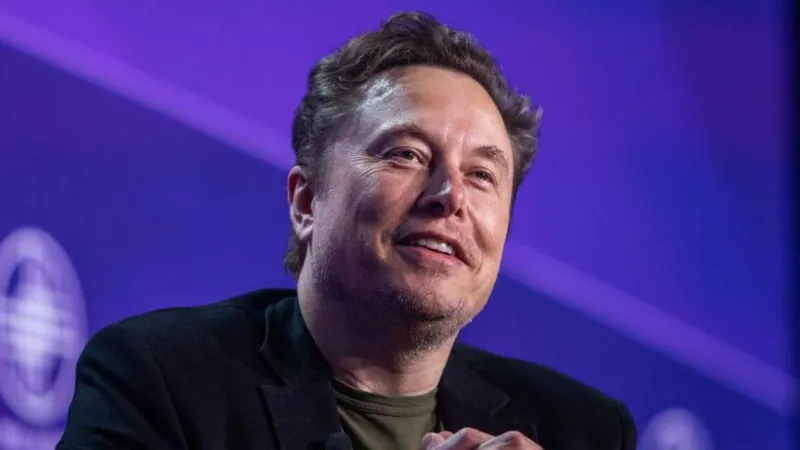
Elon Musk is pursuing an eye-watering $79 billion to $134 billion in damages from OpenAI and Microsoft, alleging that the AI company defrauded him by abandoning its non-profit mission, according to Bloomberg.
The figures were calculated by expert witness C. Paul Wazzan, a financial economist with extensive experience in complex commercial litigation. Wazzan assessed Musk’s $38 million seed donation when he co-founded OpenAI in 2015, factoring in his technical and business contributions to the early team. Based on OpenAI’s current estimated valuation of $500 billion, this translates into a potential 3,500-fold return on Musk’s initial investment.
Wazzan’s analysis attributes $65.5 billion to $109.4 billion in alleged wrongful gains to OpenAI and $13.3 billion to $25.1 billion to Microsoft, which currently holds a 27% stake in the company. Musk’s legal team argues that, as an early investor, he deserves compensation proportionate to returns “many orders of magnitude greater” than his original contribution.
The demand, however, is largely symbolic given Musk’s personal fortune, which Forbes estimates at around $700 billion, making him the world’s richest person. For context, Musk’s wealth eclipses Google co-founder Larry Page’s by roughly $500 billion, and in November, Tesla shareholders approved a $1 trillion pay package for him—the largest in corporate history.
Even the maximum $134 billion claim would represent only a fraction of Musk’s net worth, reinforcing OpenAI’s position that the lawsuit may be more about pressure and public attention than legitimate financial harm.
OpenAI reportedly cautioned investors and business partners that Musk’s claims are “deliberately outlandish and attention-grabbing” as the case heads to trial in April in Oakland, California, about 15 miles east of San Francisco.
The case underscores the high stakes in AI commercialization disputes, highlighting the tension between Musk’s early vision for a nonprofit OpenAI and the company’s current commercial trajectory.