
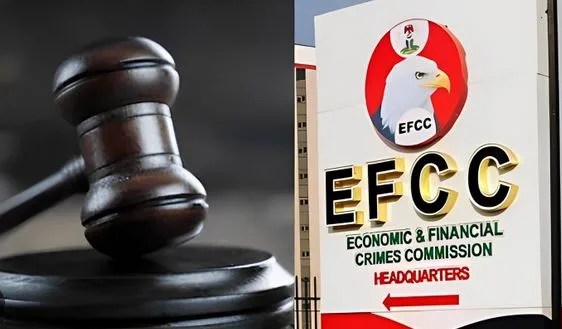
The Economic and Financial Crimes Commission (EFCC) has invited the Commissioner for Insurance, Mr Ayo Omoshehin, for questioning over allegations surrounding the collection of various fees from insurance companies under the ongoing recapitalisation exercise.
The invitation followed a petition by NICON Insurance Plc and the Nigeria Reinsurance Corporation to President Bola Ahmed Tinubu, alleging irregularities in the implementation of the recapitalisation programme by the National Insurance Commission (NAICOM).
Sources familiar with the development said the EFCC is expected to seek clarification from the insurance regulator on the legal basis for the disputed charges, the approvals obtained for their collection and how the funds allegedly collected from insurance companies were utilised.
The petitioners alleged that insurance companies had been subjected to several payments, including a one per cent recapitalisation fee on fresh capital raised, verification charges and additional registration fees.
According to the companies, the various charges could amount to more than N30 billion across the insurance industry.
NICON Insurance and Nigeria Re, in an open letter dated August 5, 2026, which was subsequently published in several national newspapers, accused the Commissioner for Insurance of making what they described as unlawful financial demands on insurance companies.
The companies specifically alleged that NAICOM demanded one per cent of the new capital being raised by insurance operators, putting the amount involved in their case at about N500 million.
They described the demand as “illegal and unconstitutional,” arguing that the money constituted shareholders’ funds and should not be transferred to the regulator.
The petitioners also alleged that they were required to pay N180 million as a “recapitalisation fee” for the verification of their recapitalisation exercise.
According to the companies, they were informed that the money would be used to engage consultants to verify their recapitalisation, but they claimed that they had not seen any consultant engaged for that purpose.
The two companies maintained that they had fulfilled the recapitalisation requirements and backed their position with documents purportedly issued by the Central Bank of Nigeria (CBN).
They stated that NICON Insurance had deposited N2.5 billion as its statutory deposit with the CBN, while Nigeria Re had a statutory deposit balance of N3.5 billion.
The petitioners further disclosed that additional capital of N20 billion and N30 billion had been injected into NICON Insurance and Nigeria Re respectively through deposits for shares.
They questioned the rationale for further financial demands by NAICOM, arguing that the capital injections and statutory deposits constituted evidence of compliance with the recapitalisation requirements.
The companies alleged that the regulator’s actions could undermine the insurance sector and frustrate the economic reforms of the Tinubu administration.
They consequently urged President Tinubu to direct the Federal Ministry of Finance or any other appropriate government agency to investigate the allegations and the handling of the recapitalisation exercise.
The petitioners also demanded the refund of monies allegedly paid by insurance companies as “recapitalisation fees” and the return of the one per cent shareholders’ funds allegedly demanded by the regulator.
NICON Insurance and Nigeria Re further urged the President to examine Section 16(3) of the new Insurance Act, which they said provides for an equivalent of 10 per cent of the minimum capital of existing insurance companies to be deposited with the CBN.
They argued that the alleged one per cent demand by NAICOM was inconsistent with the provisions of the law.
The companies also compared the insurance industry recapitalisation exercise with the banking sector’s recapitalisation programme, arguing that banks were not subjected to similar demands during the exercise.
They called for a full-scale investigation into the insurance recapitalisation programme, saying such an inquiry would help to “clean the system” and remove what they described as “bad actors.”
The petitioners added that they were prepared to face the law if any of the allegations contained in their petition were found to be false.
Meanwhile, additional allegations concerning spending by NAICOM have emerged from sources within the commission.
The sources alleged that more than N3 billion had been spent on executive vehicles.
The claim, however, could not be independently verified as of the time of filing this report.
The EFCC’s inquiry is expected to establish the legal basis for the various fees allegedly imposed on insurance companies, determine whether the required approvals were obtained and examine how the funds were collected and utilised.
The investigation may also determine whether any financial impropriety occurred in the implementation of the recapitalisation exercise and whether the disputed charges were authorised under the relevant laws and regulations governing Nigeria’s insurance industry.