

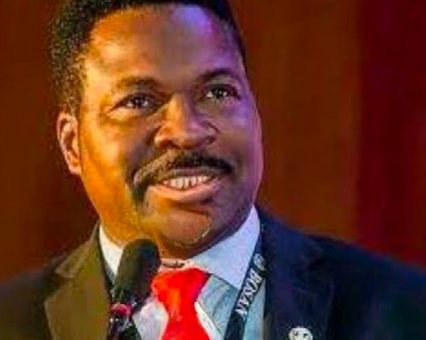
Constitutional lawyer and human rights activist, Prof. Mike Ozekhome, has called for the depoliticisation and strengthening of key government agencies such as the Economic and Financial Crimes Commission (EFCC), Independent Corrupt Practices Commission (ICPC), Central Bank of Nigeria (CBN), and the Securities and Exchange Commission (SEC), to effectively combat corruption, financial crimes, and market abuse.
Delivering a lecture titled “Quest for Unity, Equity and Justice in Nigeria: Shall the Labour of Our Heroes Past Be in Vain?” in Abuja, Ozekhome decried the persistent regulatory failures that have allowed looting and economic sabotage to flourish unchecked for decades.
He also urged the country to develop mechanisms to hold perpetrators of electoral fraud accountable, saying that making scapegoats of offenders would help sanitise Nigeria’s electoral process and deter future violations.
According to Ozekhome, restoring integrity in public institutions is critical to achieving justice, equity, and national unity.
He said, “With the 2027 elections fast approaching, the messaging must be loud and clear: electoral malpractices and violence by anyone, no matter how highly placed should not be tolerated. Whatever tools the umpire INEC needs must be provided and more.”
“Whatever else needs to be done must be done. Scapegoats should be made of deviant public-officials. The electoral process must be sanctified, as that is the only guarantee of credible outcomes or results.”
“Technology must be fully embraced to strengthen the integrity of Nigeria’s democratic process. Elections should be viewed as peaceful competitions of ideas, not battles for power.
“Both winners and losers must prioritize national unity—showing maturity, humility, and respect for democratic outcomes. Above all, the will of the people must prevail: voters’ choices must count and determine the outcome.”
Ozekhome said Nigeria should institutionalize transformational leadership to drive inclusive national progress, adding that “this leadership style focuses on empowering citizens to become change agents, aligning sector goals with public needs and promoting self-reliance and innovation.
“Transformational leaders lead by example, monitor projects directly, and ensure transparency and accountability. They prioritize excellence in education, infrastructure, agriculture, and industry, while elevating skilled local professionals.”
“To implement this, leadership development programs should be introduced, with a focus on ethics, service and citizen engagement. This will reduce corruption, boost efficiency and lay the foundation for long-term national renewal”.
He also said that Nigeria must embrace technology, especially in its electoral processes to enhance transparency and credibility, adding that political actors should uphold the spirit of democracy by recognizing elections as a peaceful contest of ideas not a do-or-die affair.
He said winners in electoral context should be magnanimous in victory and losers gracious in defeat, prioritizing national unity over personal ambition.
The Constitutional Lawyer argued that there is also the need for deregulation, trade facilitation and investment in infrastructure in Nigeria, stressing that the heroes who fought for a free and self-reliant Nigeria did not envision a country perpetually reliant on foreign imports and decaying infrastructure.
He said Investing in agriculture, manufacturing, technology and SMEs will he a way of honouring their legacy by building a more resilient and diverse economy.
He also advocated currency and market reforms, saying “reforms like the removal of fuel subsidies and floating the naira are steps toward economic realism, that is, reducing corruption-prone spending and allowing market forces to determine exchange rates. These measures, while painful in the short term, will correct longstanding distortions that have kept Nigeria from becoming globally competitive.
“Improving education, healthcare and vocational training cannot be over emphasized. Nigeria’s economic challenges are not just about policies, they are also about people.
“The call for skill acquisition centres in every Local Government Area and removal of hiring restrictions that unfairly exclude youth is a commitment to inclusive growth. These actions strive to give every Nigerian a stake in the future, echoing the nationalist ideals of empowerment and social justice.
“As most spiritual leaders will say, there must be individual ‘revival’ before national change can happen. Spiritual and moral transformation, including a return to the fear of God, is a response to Nigeria’s moral decay. Corruption, violence and selfish governance are seen not just as institutional failures, but as ethical ones.”
“Recovered stolen public funds should be reinvested into the economy. Corruption, which undermines every aspect of national development must be combatted through stronger institutions, legal accountability and plugging revenue leakages.”
“There’s an urgent need for youth empowerment; not just through employment but through moral reorientation and civic responsibility. Political thuggery and social vices msut be shunned, replacing them with discipline and national pride. This speaks to a fundamental question: are the youth inheriting a nation worth serving? These recommedations aim to make that answer “yes.”
“I strongly encourage supporting local industries, from buying Nigerian-made products to boosting exports and reducing imports. If Nigerians adopt this mindset, they would not only be fulfilling individual dreams but also stimulating the economy.”
“State and local governments should be empowered to drive development in agriculture, SMEs, tourism and local industries by granting them more fiscal autonomy and access to development financing.”
“Institutions like the EFCC, ICPC, CBN and SEC must be depoliticized and equipped to enforce laws against corruption, financial crimes and market abuse. Regulatory failure has allowed looting and economic sabotage to go unchecked for decades.”
“Stabilizing the electricity supply is critical for job creation and industrial growth. Some areas that can be considered include: Incentivizing off-grid solutions (solar, hydro), privatizing and restructuring inefficient government-owned energy assets.”
“Make budget processes fully open, including real-time tracking of allocations and spending. Citizens should have access to dashboards showing how public funds are used”.
He also advocated for the establishment of a National Employment Guarantee Scheme that could provide temporary jobs in public works (roads, sanitation, afforestation) to reduce unemployment and boost consumption while infrastructure is improved, while expanding broadband internet access, especially in rural areas, and promote digital literacy to unlock opportunities in technology, online business, remote work and innovation.
He is also suggested the encouragement of Nigerians abroad to invest directly in SMEs and infrastructure projects by creating transparent, secure diaspora bonds, investment clubs and tax incentives, saying “Nigeria’s heroes dreamt of unity—this is a way to make it borderless”
Ozekhome stressed, “It is clear that our urgent task as a people is to achieve a credible leadership recruitment process, especially at the highest level. One might well wonder: what is wrong with the present one and how can we correct it? The answer is not new: it is the same answer that has been proffered over the years, but whose application has unfortunately, proved to be the Gordian Knot, a hard nut to crack.”
“We must evolve a new national ethos which prioritizes competence, merit and patriotism above primordial considerations such as ethnicity (place of origin), religion and social status. We must be Pan-Nigerian in our outlook – and in the choices of our political leaders – and discard and eschew sentiments. We must be objective and call a spade a spade – no matter whose ox is gored.”
“We must be ready to call out a thief, a deviant, or someone whose source of wealth is either unknown or suspect. We must stop glorifying ill-gotten or suspect wealth by rewarding those who flaunt them with traditional titles or political offices. That was how it was in the olden days. We must return to those days – we must return to our traditional values and ethos where character, dignity and integrity were all that mattered.”
“More specifically, we must re-prioritize education as it holds the key to economic empowerment and prosperity. That was how the Asian Tigers achieved the famous leap from Third World status to First World economies. We must strengthen our institutions, particularly our electoral, economic, justice and law enforcement sectors.”
“Ours must become truly a nation of laws, instead of a nation of men – which it currently is. Justice must not just be an empty slogan, it must be done and seen to be observed in the choices, policies and programmes of Government at all levels. It must truly be blind, not just in the decisions of our courts, but beyond them – in the behaviours of ALL Government officials.”
“This re-orientation should apply across the board to include our armed forces, which must be re-trained to emphasise their professionalism. They must realize that theirs is a calling which is probably the highest of all: the readiness to put their lives on the line for their country and the rest of us.”
“Equally important are other gate-keepers: the electoral institution (INEC), our law enforcement agents and the judiciary. Short of being angels or saints, they should either shape up or ship out. They simply cannot run with the hare and hunt with the hound; they cannot have it both ways.”
He spoke of the urgent need for a people’s driven constitution that truly reflects the will, diversity and collective aspirations of all Nigerians and serves as a binding covenant and a source of unity, equity and justice.