


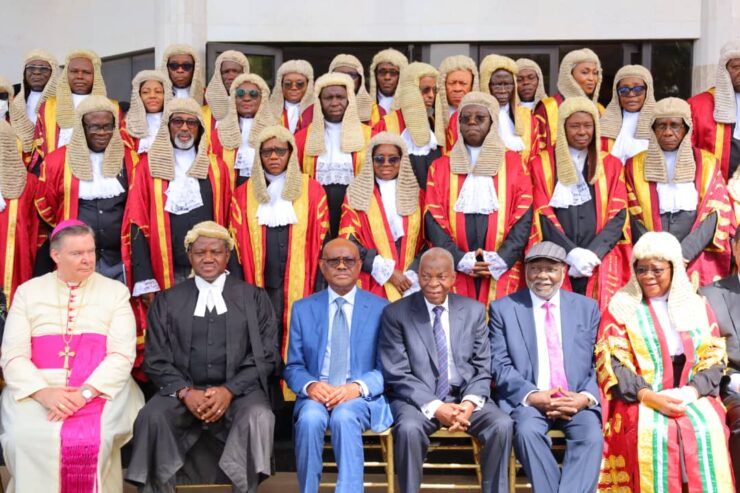
At the ceremonial opening of the 2025/2026 Legal Year of the Court of Appeal in Abuja, the Attorney General of the Federation and Minister of Justice, Lateef Fagbemi, SAN, called on the judiciary to expedite hearings in cases involving terrorism, human trafficking, kidnapping, and other violent crimes. He stressed that the judiciary must lend its weight to national efforts aimed at combating insecurity and safeguarding constitutional democracy.
Fagbemi noted that Nigeria is at a critical juncture, facing grave threats from insurgency, terrorism, banditry, and kidnapping. He urged judges to demonstrate firmness and consistency in adjudication, ensuring that perpetrators of violent crimes are held accountable and impunity dismantled.
“The judiciary, as the guardian of justice and custodian of the rule of law, must support national security efforts through courageous adjudication. Swift hearings in terrorism cases send a clear message that such crimes will face immediate and decisive legal consequences,” he said.
The AGF explained that the Federal Government’s counter‑terrorism strategy combines kinetic and non‑kinetic approaches, with timely prosecution of suspects complementing military and intelligence operations. He assured that the administration of President Bola Ahmed Tinubu is committed to strengthening the judiciary, including the appointment of additional judges of the Federal High Court to handle terrorism‑related matters promptly.
Fagbemi also called for collective resolve among citizens, stressing that unity is essential in confronting terrorism and violent crime.
In his remarks, the Minister of the Federal Capital Territory, Nyesom Wike, pledged improved welfare and accommodation for judicial officers. He announced that budgetary provisions have been made for the construction of additional residential quarters for judges of the FCT High Court, as part of broader reforms to enhance judicial efficiency.
Wike disclosed that, under the President’s directive, the FCT Administration had formally handed over the Certificate of Occupancy for the Supreme Court’s land and commenced full perimeter fencing of the apex court complex to prevent encroachment and security breaches. He described the intervention as long overdue, noting that it would serve as a confidence‑building measure for the judiciary.
The minister highlighted ongoing judicial infrastructure projects, including: residences for Heads of Courts, new Magistrate Court complex in Jabi District, staff quarters for the Nigerian Law School, the design and construction of the Court of Appeal complex in Abuja, residential quarters for judges of the National Industrial Court and Federal High Court
Wike reaffirmed the FCTA’s commitment to justice sector reforms, stressing that the priorities for the 2025/2026 legal year are to consolidate existing gains and expand support where needed.
“Justice must never be compromised under any circumstances, for it is the bedrock of our democracy and the safeguard of public trust,” he declared.
He expressed optimism that the new legal year would usher in greater efficiency and improved justice delivery at the Court of Appeal.