


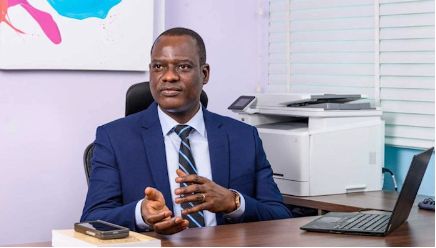
Bank of Industry (BOI) has stated that mobilising domestic capital has become imperative to financing Nigeria’s development priorities.
This was made as policymakers, development finance institutions (DFIs), and multilateral partners converged to chart a path towards sustainable economic growth.
Speaking at the 6th Annual Conference and General Assembly of the Association of Nigerian Development Finance Institutions (ANDFI), themed “Unlocking Domestic Capital for Development Financing,” the Managing Director and Chief Executive Officer of the Bank of Industry and Chairman of ANDFI, Dr Olasupo Olusi, said Nigeria must increasingly rely on domestic resources to fund critical sectors as access to long-term global development finance becomes more constrained.
According to Olusi, the conference’s theme reflects one of the country’s most pressing economic priorities.
“As access to long-term global development capital becomes increasingly constrained, mobilising domestic resources is no longer simply desirable. It is essential,” he said.
He explained that domestic capital must play a greater role in financing infrastructure, industrialisation, agriculture, housing, MSME development and other strategic sectors identified in Nigeria’s long-term development agenda.
Delivering the keynote address, the Minister of Finance and Coordinating Minister of the Economy, Dr Taiwo Oyedele, said Nigeria’s ambition of building a one-trillion-dollar economy would depend on effectively mobilising domestic savings rather than relying primarily on government borrowing or foreign capital.
He argued that countries that successfully mobilise domestic resources would be better positioned for long-term economic growth, stressing that domestic capital complements rather than replaces foreign investment.
Also speaking, the African Development Bank’s Regional Director General for Nigeria, Dr Abdul Kamara, described strong national development finance institutions as a strategic imperative for Africa’s largest economy.
Kamara disclosed that Nigeria would require an estimated $2.3 trillion in cumulative investments over the next two decades to close its infrastructure deficit and meet development benchmarks by 2043.
The Managing Director of the Bank of Agriculture, Ayo Sotinrin, announced plans to transform the institution into “Bank of Agriculture 2.0” through a proposed $1 billion recapitalisation, describing the initiative as a major step towards expanding agricultural financing.
According to him, the recapitalisation, backed by President Bola Tinubu and the Minister of Finance, will enable the bank to expand lending, digitise operations and deepen nationwide impact.
Goodwill messages were also delivered by representatives of the Nigerian Export-Import Bank (NEXIM), the Development Bank of Nigeria (DBN), the Nigeria Mortgage Refinance Company (NMRC), the National Credit Guarantee Company and other stakeholders, all reinforcing the importance of coordinated efforts to unlock domestic capital for national development.