
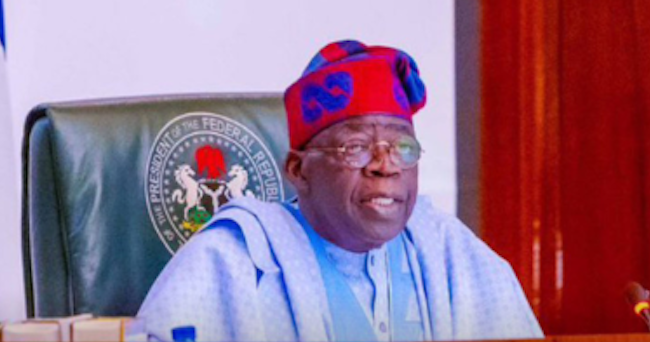
President Bola Tinubu has ordered the return of several convicted persons earlier granted state pardon, including Maryam Sanda and over 140 others, to prison following widespread criticisms that greeted the decision.
In a statement from the Presidency on Tuesday, October 29, signed by the Special Adviser to the President on Information & Strategy, Bayo Onanuga, the president formally signed a revised instrument of clemency and pardon after reviewing the earlier approved list with input from the Council of State and feedback from the public.
The October 11 pardon had drawn outrage nationwide after it emerged that the list included persons convicted of murder, drug and human trafficking, fraud, and unlawful possession of firearms.
Among those pardoned at the time were former lawmaker Farouk Lawan, late environmental activist Ken Saro-Wiwa, nationalist Herbert Macaulay, the late Mamman Vatsa (a major general), and Maryam Sanda, sentenced to death in 2020 for killing her husband.
However, the latest Presidency’s statement said the president had directed a further review of the list to exclude individuals convicted of serious crimes. Those deleted from the list were persons found guilty of kidnapping, murder, drug-related offences, human trafficking, fraud, and arms dealing. The president reduced the initial list, containing 175 beneficiaries, to 34.
According to the statement, the president’s decision was guided by national security concerns, the feelings of victims and the general public, and the need to uphold justice and maintain confidence in law enforcement.
“The action became necessary in view of the seriousness and security implications of some of the offences, the need to be sensitive to the feelings of the victims of the crimes and society in general, the need to boost the morale of law enforcement agencies and adherence to bilateral obligations,” the statement said.
The Presidency also explained that the review was informed by the concept of justice as a “three-way traffic” involving the accused, the victim, and society.
While some convicts had their sentences commuted, others were ordered back to prison after the review. The final approved list of eligible beneficiaries has now been transmitted to the Nigerian Correctional Service for implementation in line with the newly signed instruments of release.
To ensure greater accountability in future exercises, Tinubu directed the relocation of the Secretariat of the Presidential Advisory Committee on Prerogative of Mercy from the Federal Ministry of Special Duties to the Federal Ministry of Justice. He also ordered the Attorney-General of the Federation, Lateef Fagbemi, to issue new operational guidelines for the exercise of the prerogative of mercy.
The guidelines, according to the statement, will make it mandatory for the committee to consult relevant prosecuting agencies before recommending any convict for clemency. This, the president said, would ensure that only deserving individuals who meet established legal and procedural requirements benefit from future pardons.
Tinubu also thanked Nigerians for their feedback on the matter, describing it as essential to improving governance and strengthening public trust in the justice system.
He reaffirmed his administration’s commitment to judicial reforms and transparency in the exercise of constitutional powers, saying the objective was to “improve the administration of justice in Nigeria and uphold the principles of fairness, accountability, and public confidence.”
In the new list, Tinubu granted clemency to 15 convicts, namely Oroka Michael Chibueze, Adesanya Olufemi Paul, Daniel Bodunwa, Hamza Abubakar, Buhari Sani, Mohammed Musa, Muharazu Abubakar, and Ibrahim Yusuf.
Others are Saad Ahmed Madaki, Ex-corporal Michael Bawa, Richard Ayuba, Adam Abubakar, Emmanuel Yusuf, Chinedu Stanley, and Johnny Ntheru Udor.
The president also granted pardons to another 15 convicts. They are: Anastasia Daniel Nwaobia, Hussaini Alhaji Umar (a lawyer), Ayinla Saadu Alanumu, Farouk M. Lawan, Herbert Macaulay, Mamman Jiya Vatsa (a late major general), Ken Saro Wiwa, and Saturday Dobee.
The list includes Nordu Eawo, Daniel Gbooko, Paul Levera, Felix Nuale, Baribor Bera, Barinem Kobel, and John Kpuine.
In addition, he commuted the death sentence of four convicts to life sentences. The beneficiaries are Emmanuel Baba, Abubakar Usman, Khalifa Umar, and Mohammed Umar
The controversy surrounding the initial pardon had triggered widespread public criticism, with rights activists and civil society groups questioning the rationale for freeing convicted murderers and drug traffickers.
Many Nigerians argued that the decision undermined the country’s anti-corruption and anti-narcotics efforts and sent the wrong message to law-abiding citizens.