
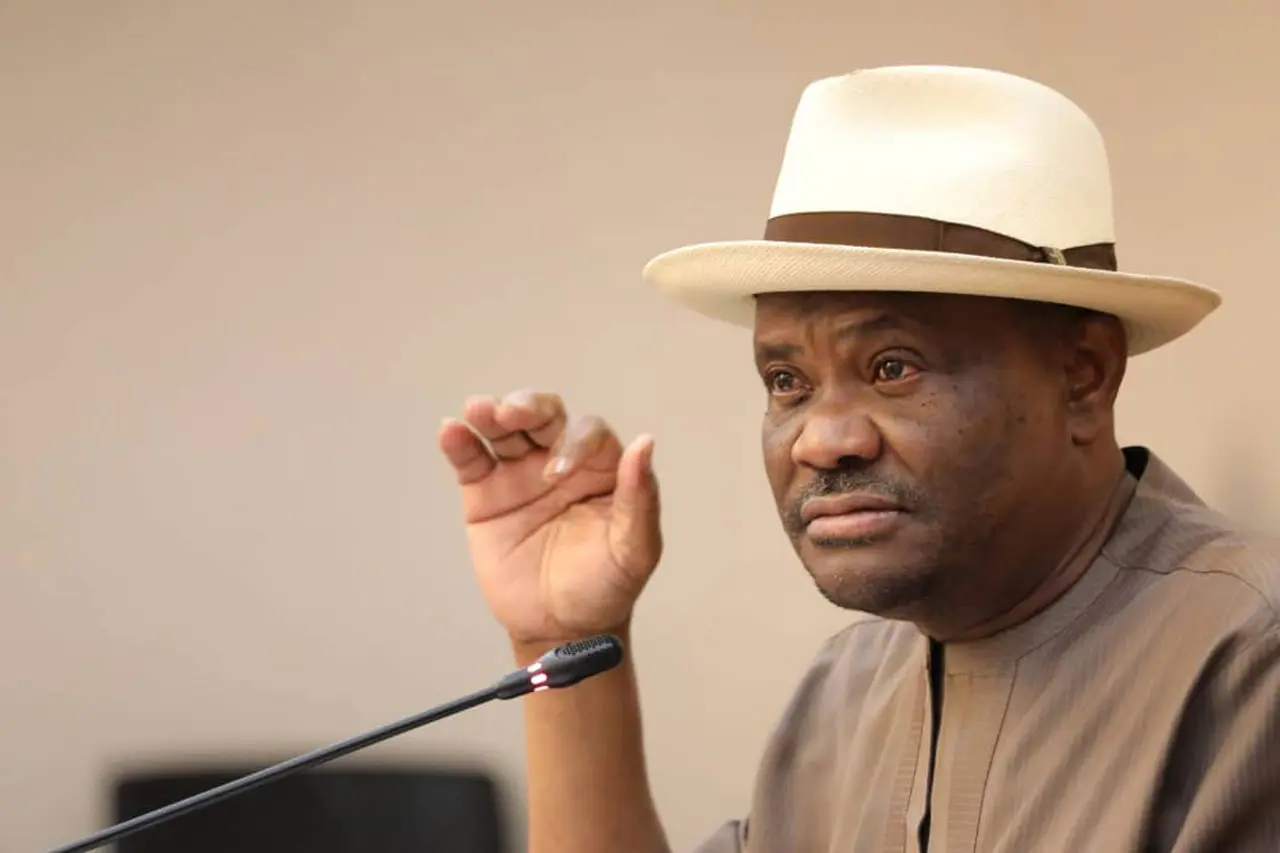
Amnesty International has sharply criticized Nigeria’s Federal Capital Territory (FCT) Minister, Nyesom Wike, for targeting prominent human rights lawyer Chidi Odinkalu. The organization condemned Wike’s efforts to use the legal system to suppress dissent and undermine the legal profession’s independence.
In an April 2, 2025 statement, Amnesty expressed alarm over Wike’s call for Nigeria’s Body of Benchers to discipline Odinkalu, a former Chairman of the National Human Rights Commission, for his advocacy and public criticism of judicial interference. Wike accused Odinkalu of “degrading the legal profession” simply for challenging judicial decisions and speaking out against the minister’s interactions with Supreme Court Justice Emmanuel Akomaye Agim.
Amnesty denounced the move as an abuse of power, warning that it could transform the Body of Benchers into a tool for stifling free speech. The organization emphasized that Odinkalu’s actions were part of his right to freedom of expression under both Nigerian and international law.
The statement also highlighted the broader trend of political repression in Nigeria, where human rights defenders and activists are increasingly targeted. Amnesty urged the Nigerian government to end the harassment of Odinkalu and protect the rights of all lawyers to perform their professional duties without fear of retaliation.
In response, Odinkalu rejected Wike’s accusations on social media, accusing the minister of attempting to shift the blame onto him. Amnesty International further criticized the Nigerian government’s disregard for its constitutional and human rights obligations, urging immediate action to prevent the misuse of the justice system to suppress opposition.
The conflict between Wike and Odinkalu dates back to November 2024, when Wike dismissed Odinkalu’s tenure at the NHRC as a failure, and Odinkalu accused the minister of unethical behavior.